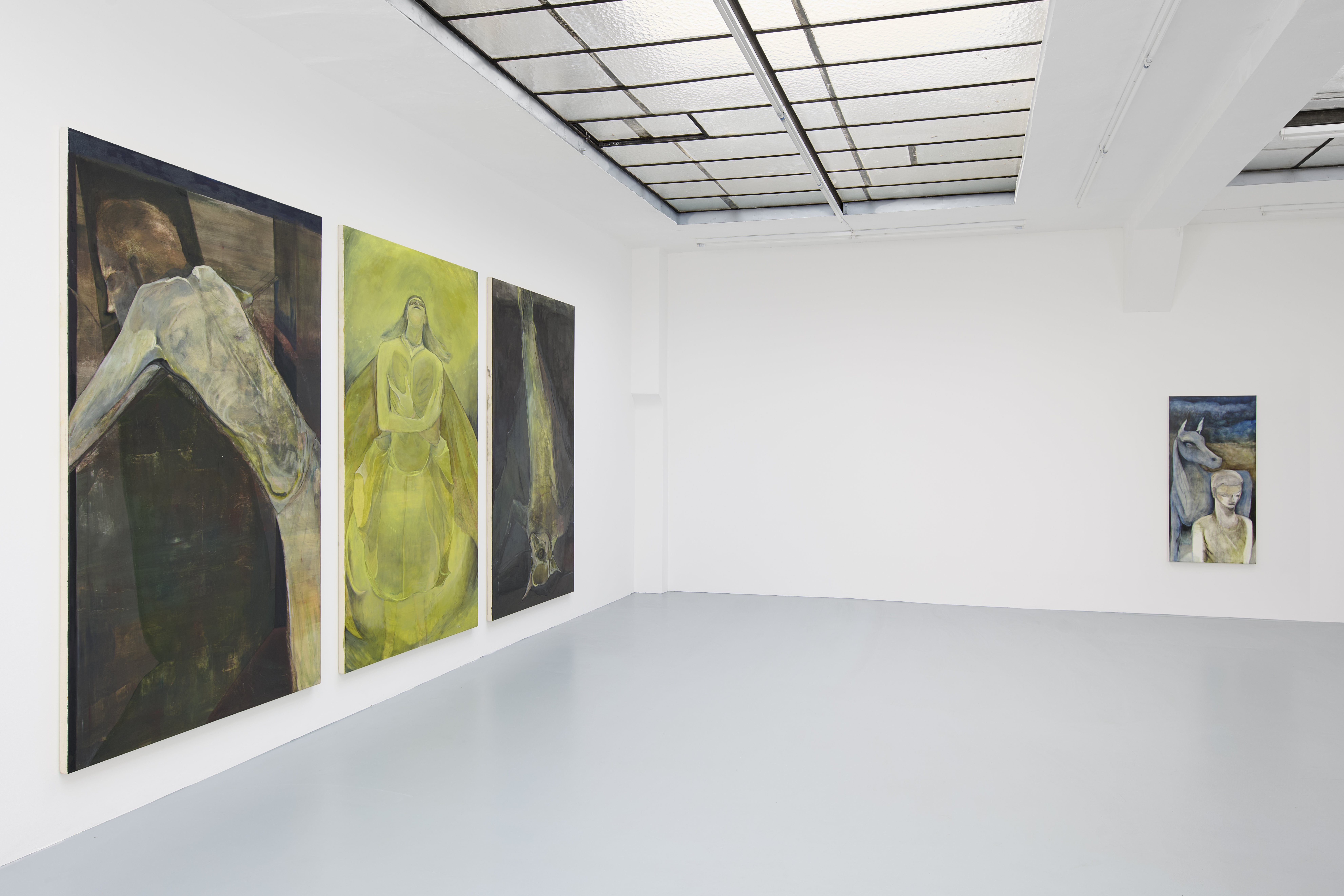
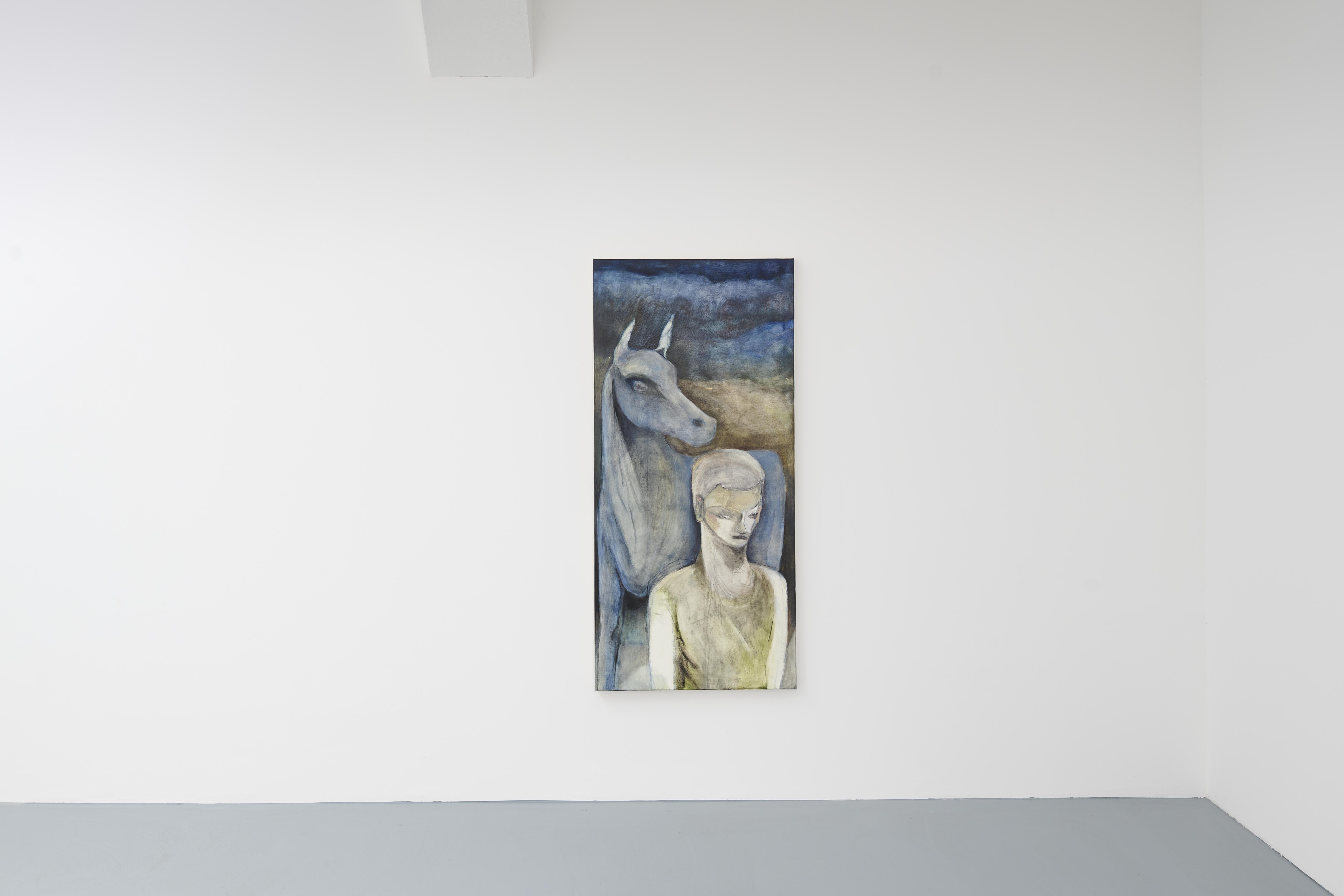
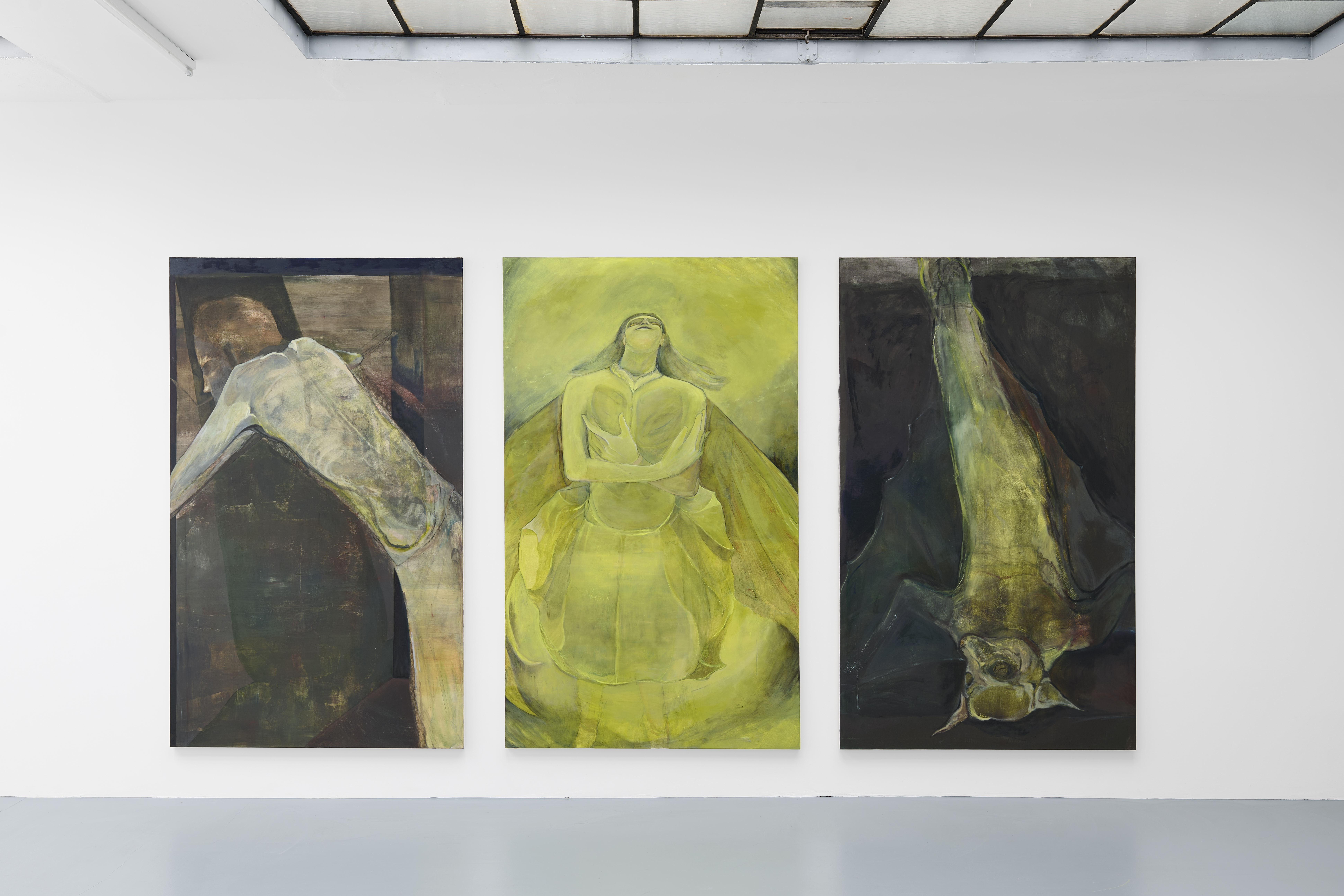
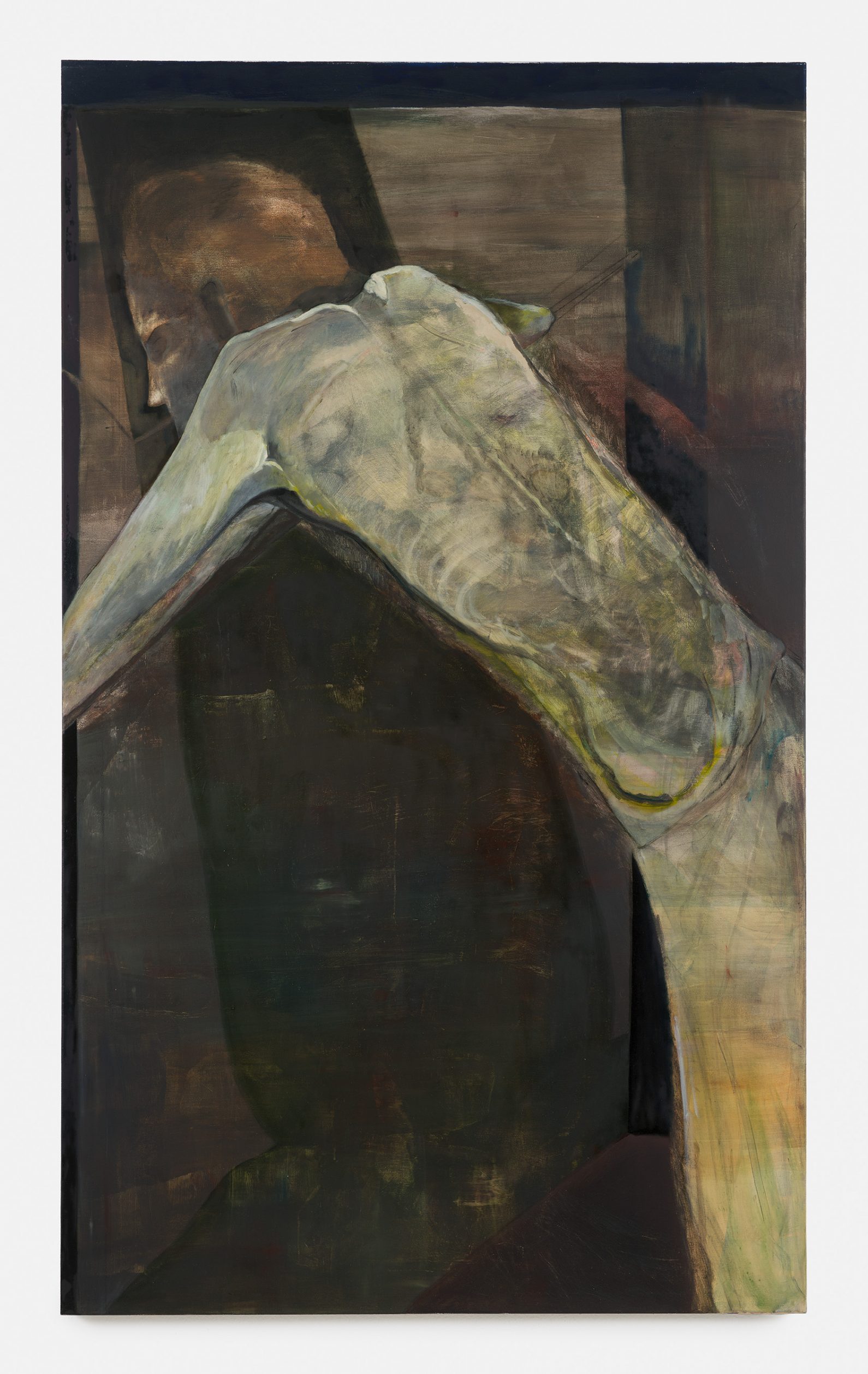
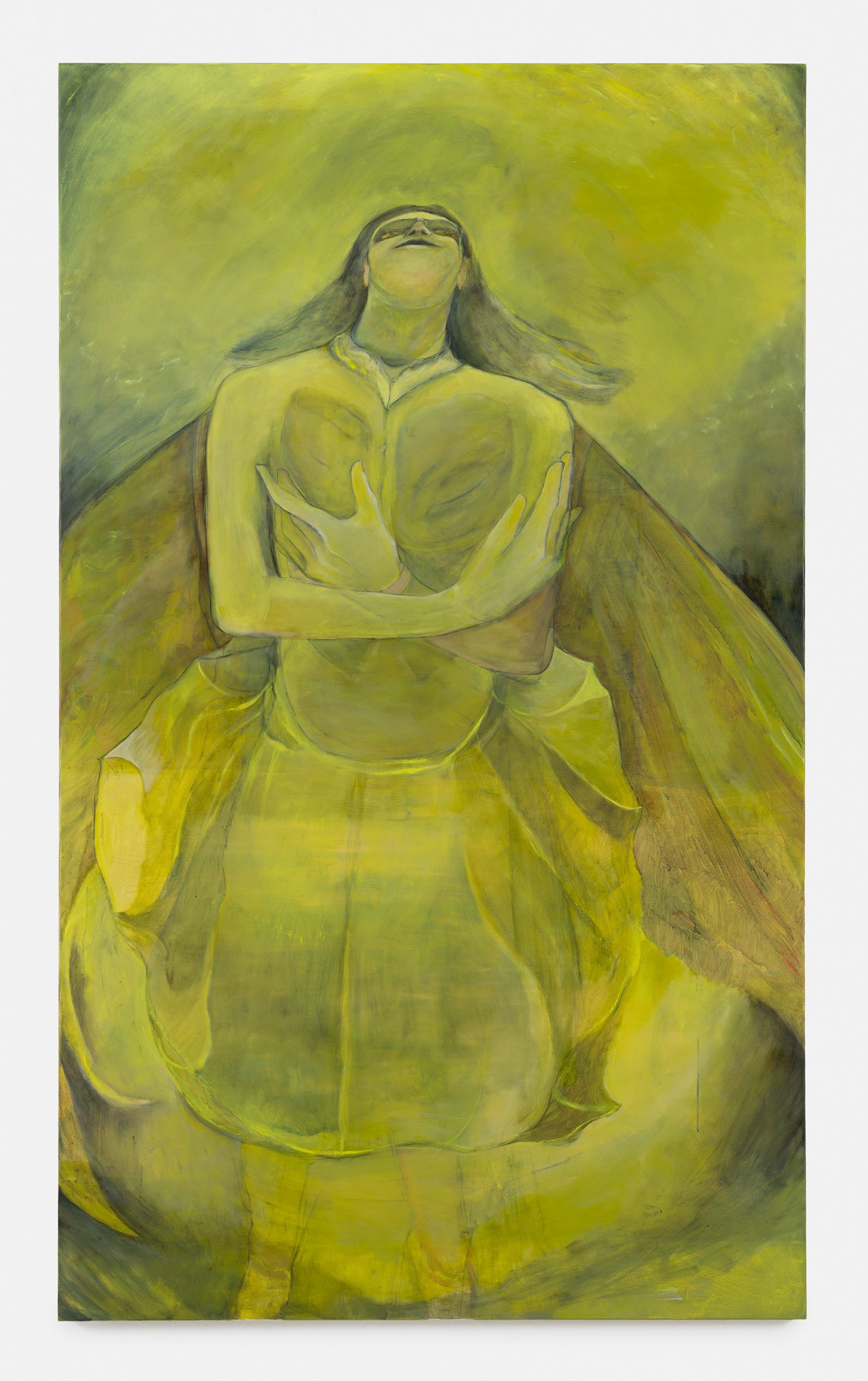
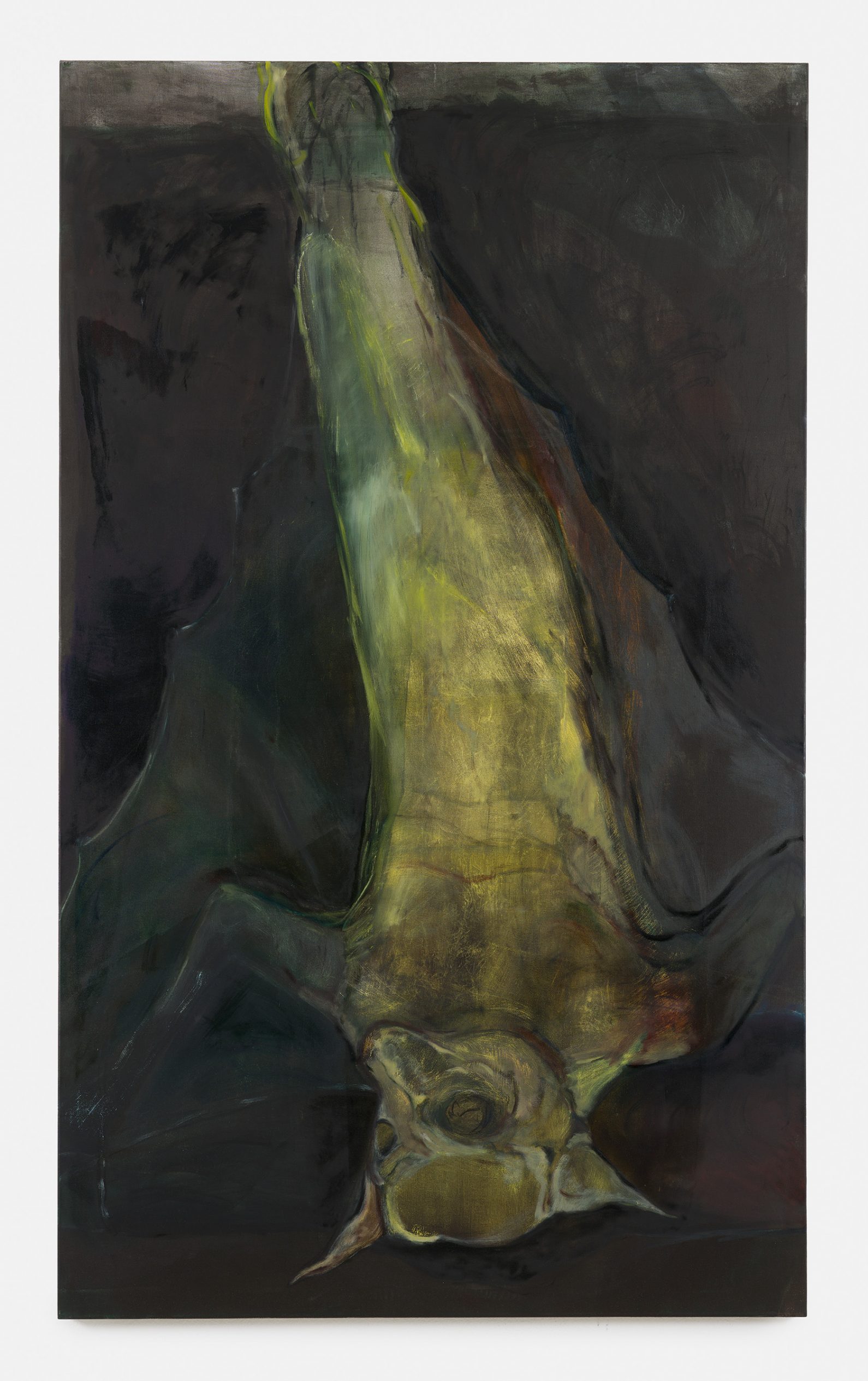
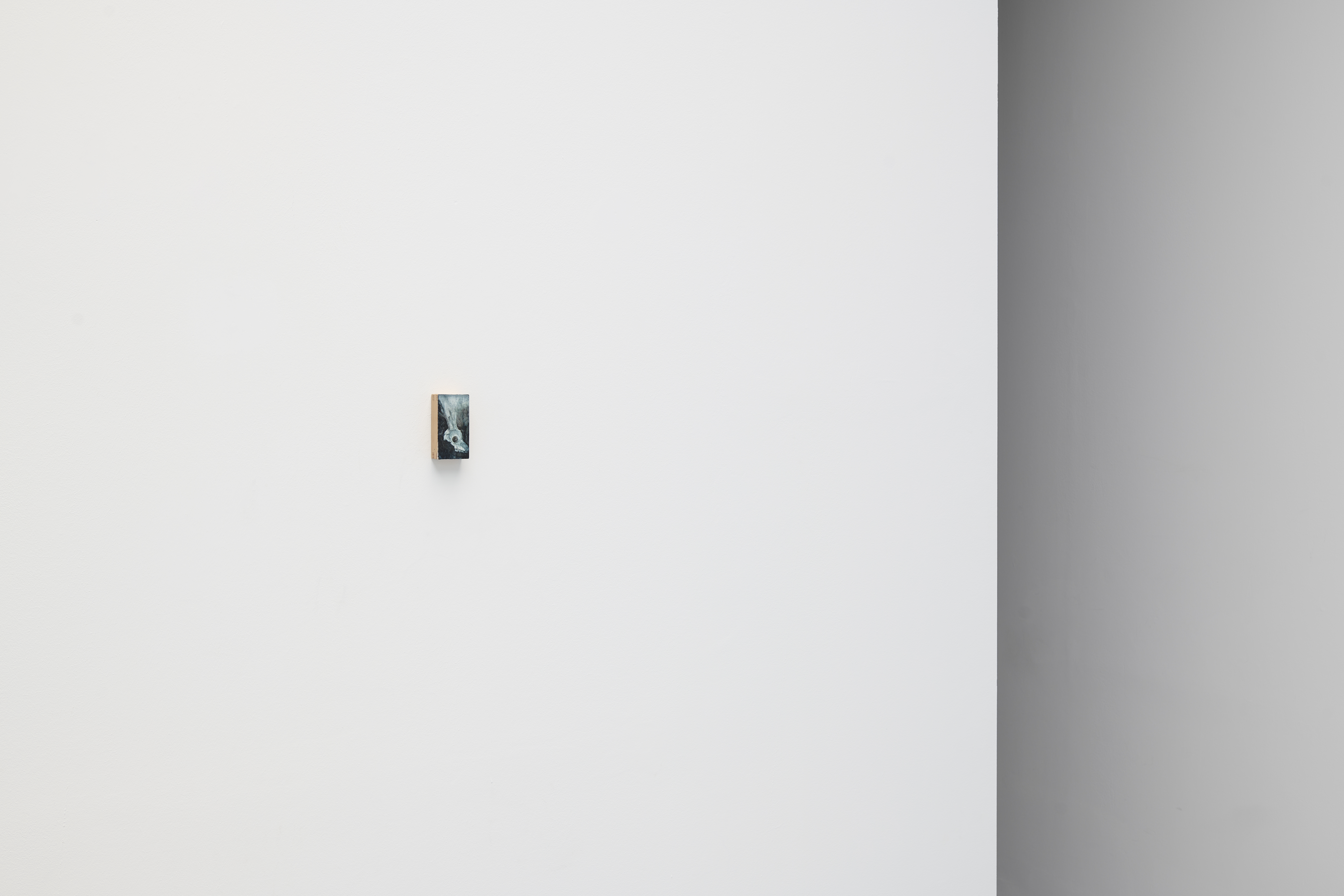
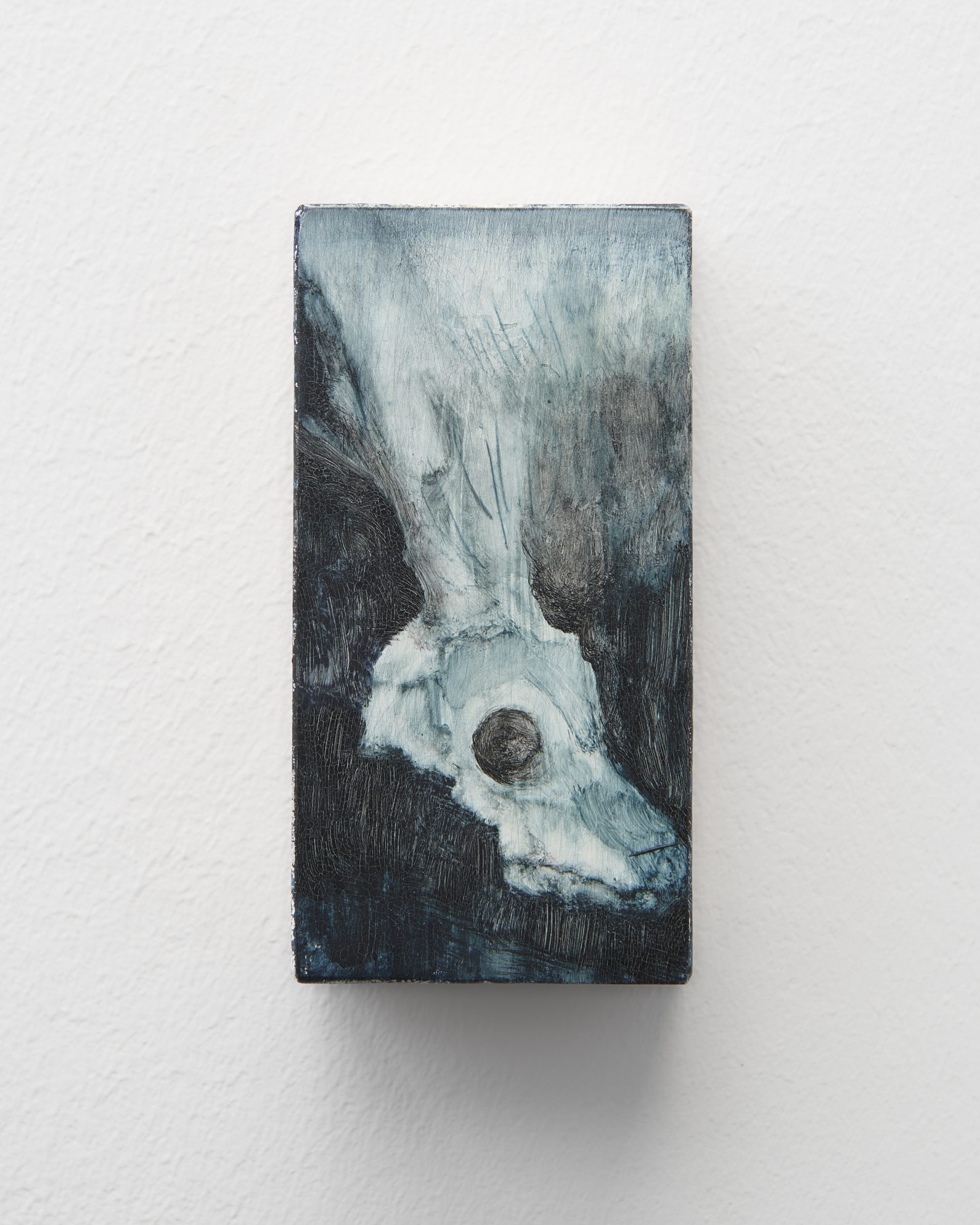
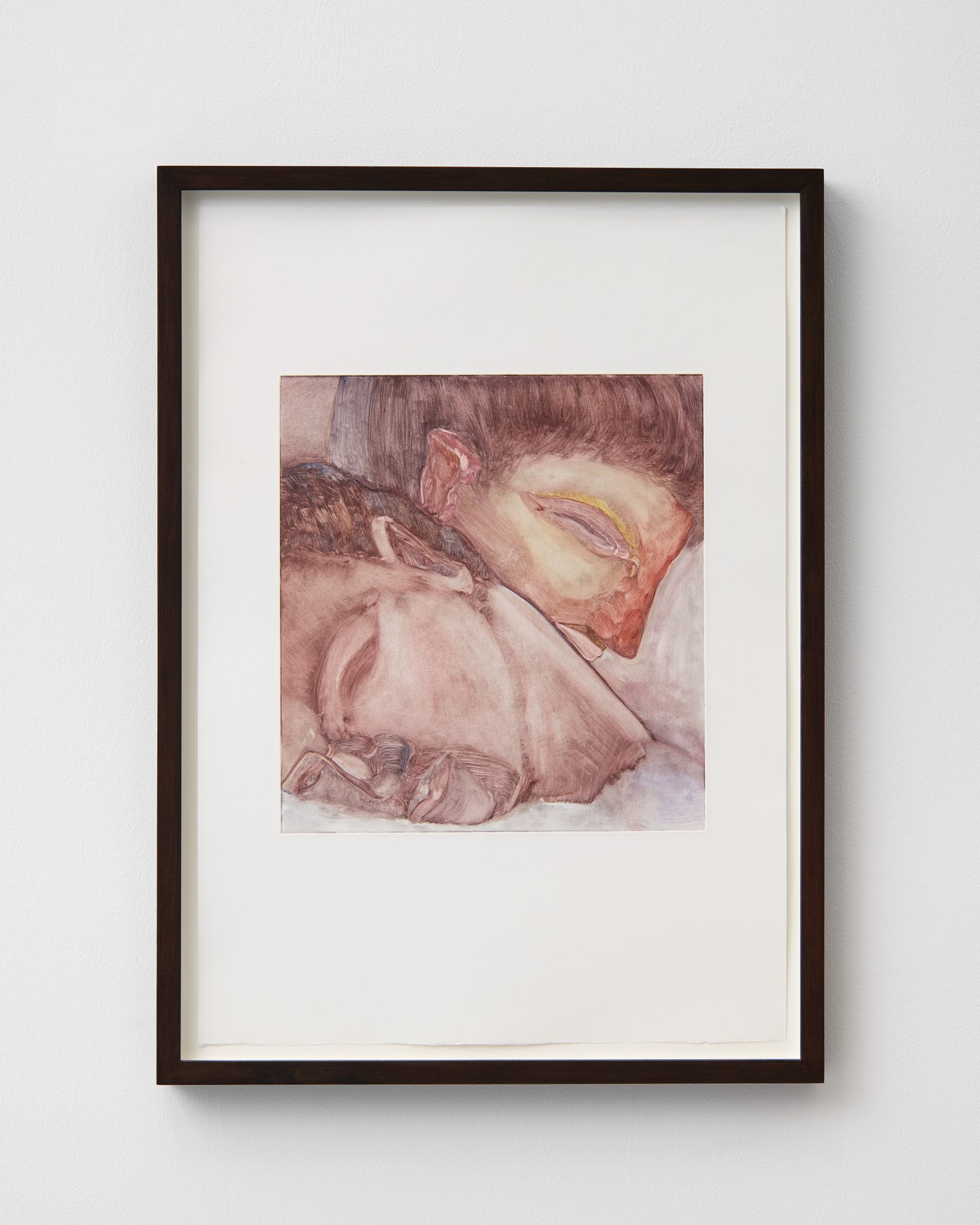
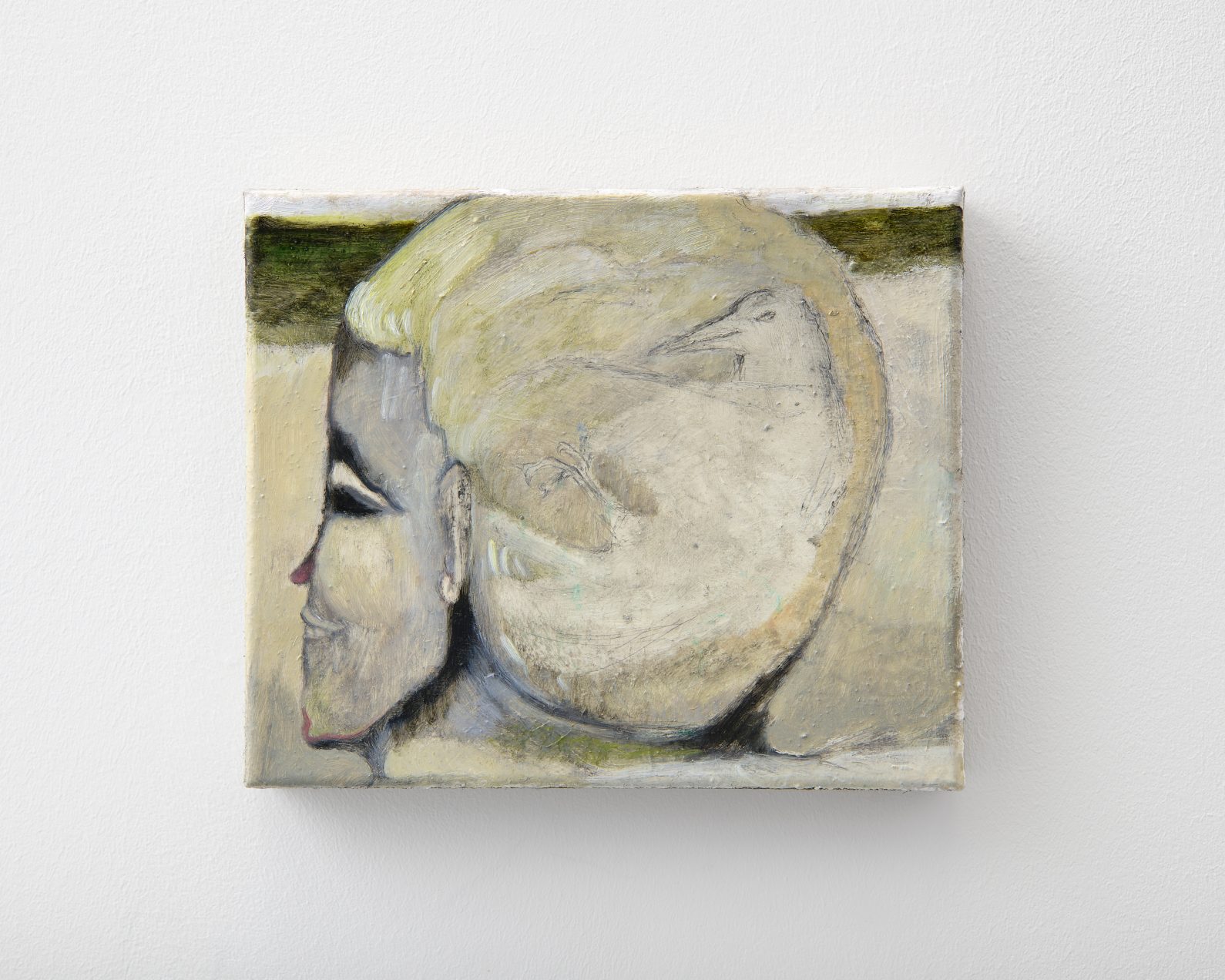
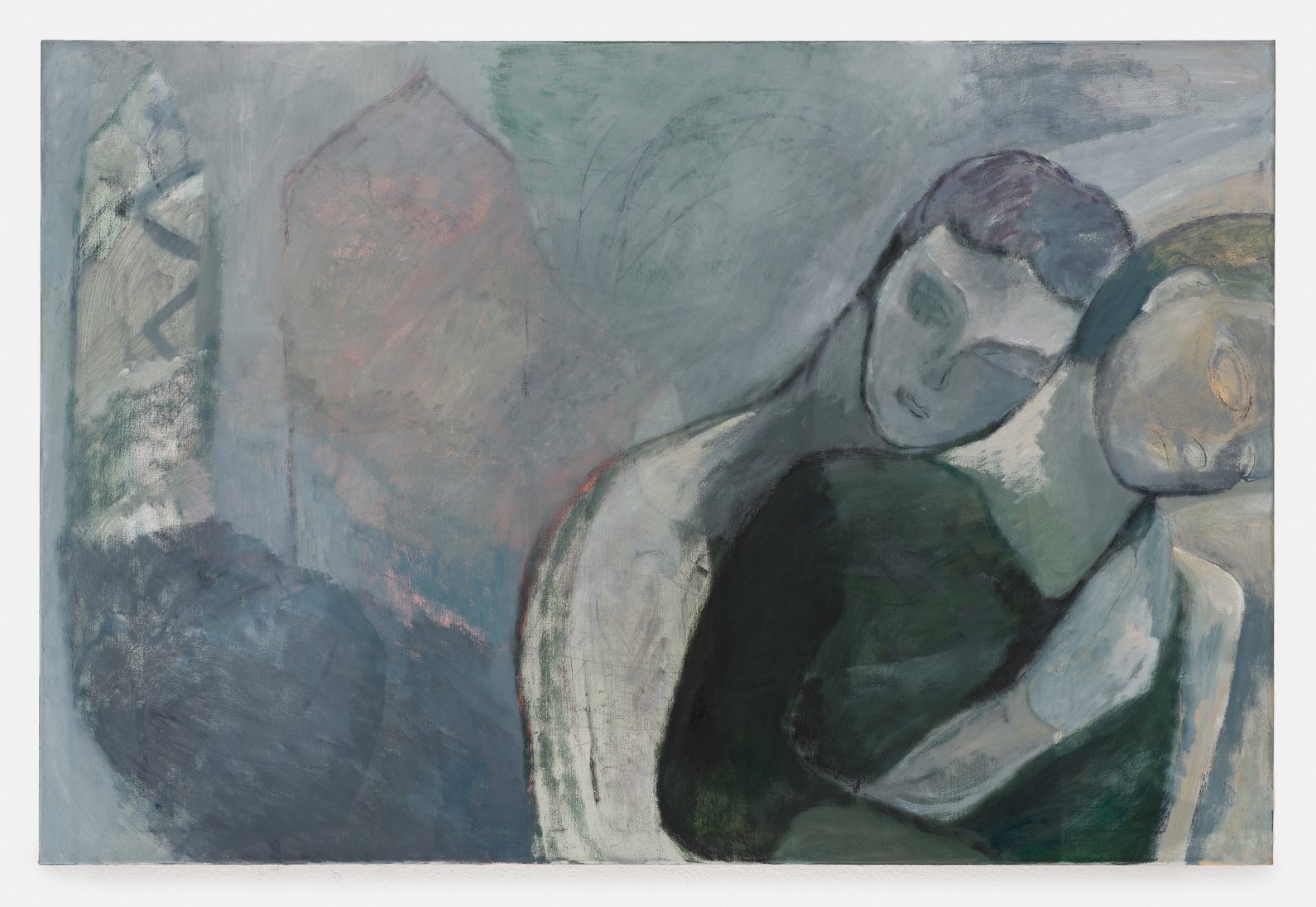
Paulina Caspari is pleased to announce Axis, the first solo exhibition by Lexia Hachtmann with the gallery. The exhibition takes its title from the mathematical coordinate system x1, x2, and x3, whose intersecting axes generate three-dimensional space. For Hachtmann, Axis becomes a metaphor for orientation, movement, and the possibility of multiple viewpoints. The three paintings in the air (x1, x2, x3) embody this idea, extending beyond the picture plane and inviting viewers to navigate the works from shifting positions.
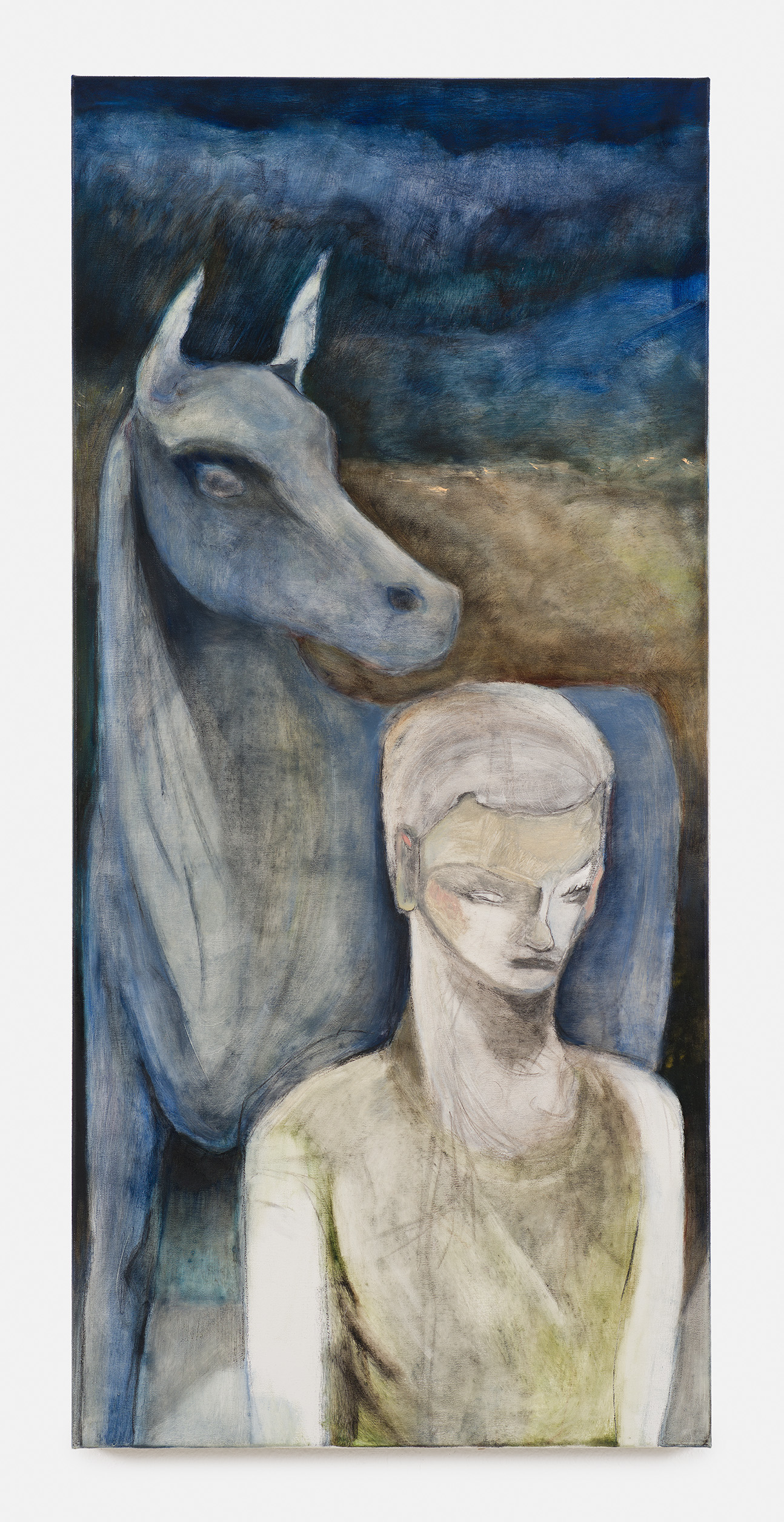
Underlying the exhibition is a sculptural understanding of space, informed in part by Ernst Barlach’s Der Schwebende (The Floating One). Rather than presenting fixed images, Hachtmann’s paintings unfold through layers of transparent colour, drawing, and erasure. Glazes, overlays, and scraped passages create surfaces through which images appear to emerge and recede, occupying several visual and temporal planes at once. Central to Hachtmann’s practice is a process of accumulation and revision.
Built through successive layers, the paintings retain traces of what came before, allowing different moments to coexist within a single image. What has disappeared continues to resonate beneath the surface, transforming the paintings into spaces where memory and perception remain in constant negotiation. Many of the works deliberately destabilise orientation. Horizontal and vertical alignments lose their certainty, leaving the gaze suspended between flight, falling, and drift. Rather than unfolding through linear narratives, the paintings follow the associative logic of memory, where images, places, and times overlap and reconfigure. Meaning remains open and is shaped through the viewer’s own focal points in the space.
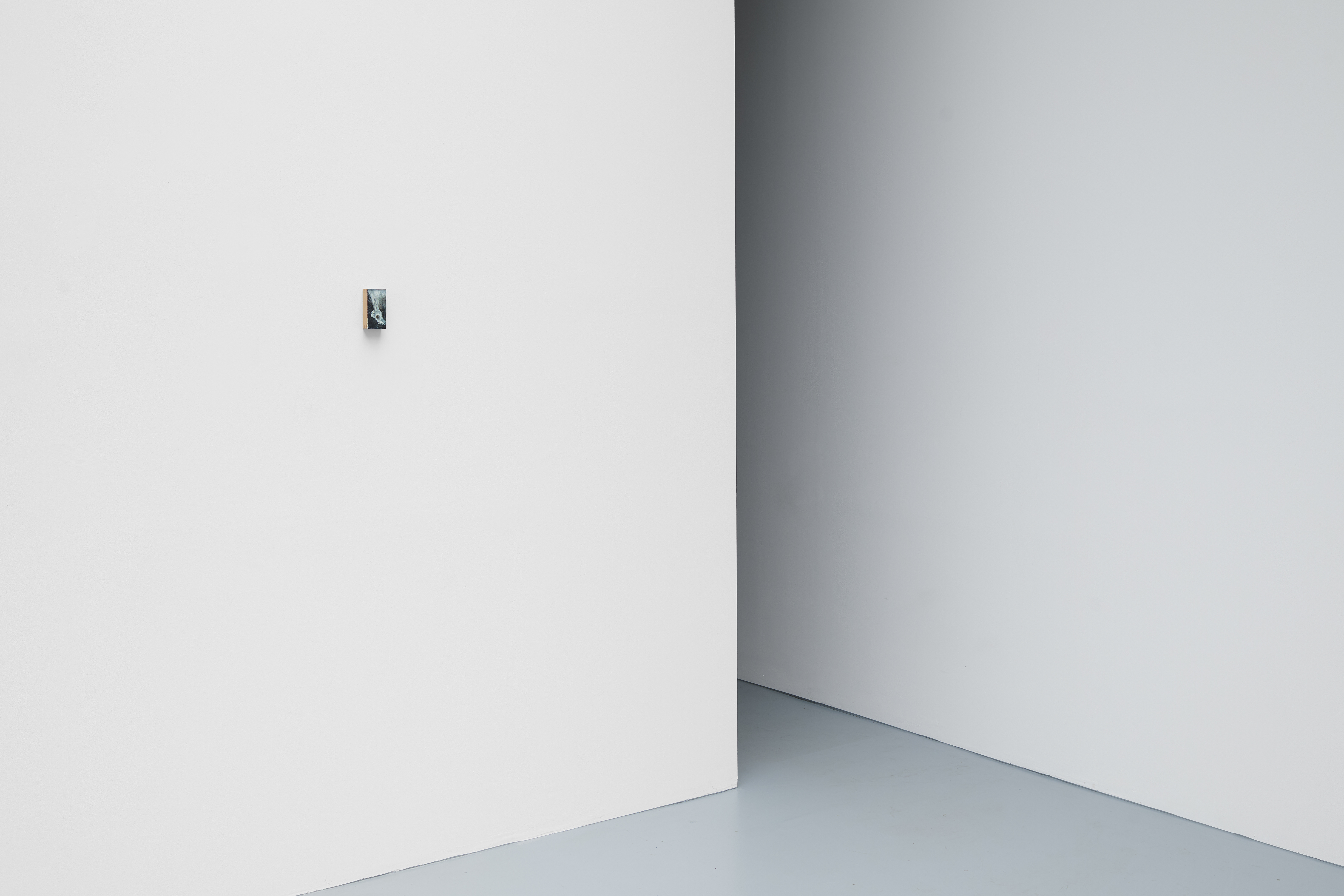
The title Axis additionally evokes a point of intersection, referencing a place where different trajectories meet. Although inherently two-dimensional, painting, when experienced in space, integrates the viewer as an active point into its proposal. The large scale of the works reinforces this physical encounter, requiring continual shifts between distance and proximity, overview and detail. Several titles in the exhibition are drawn from ‘Song of Childhood’, the poem written by Peter Handke for the film ‘Wings of Desire’. The child’s gaze—curious, open, and free from fixed assumptions—serves as an important point of reference throughout the exhibition and asks in what way social conducts are learned and acted upon later in life. The works engage with questions of memory, translation, and absence, reflecting on what remains visible, what is lost, and how meaning is continually reconstructed through acts of looking and remembering.
With Axis, Hachtmann proposes a space of encounter in which perspectives intersect, images remain in motion, and seeing itself becomes an act of continuous reorientation.